Free Guided Tour VIENNA 1900—Everyday. A Total Work of Art
Language: English
Free Vienna 1900 guided tours on the first weekend after opening (plus admission) | Duration: 60 minutes
With the reorganization of its permanent collection on Vienna around 1900, the MAK resolutely continues its policy of recent years of interpreting its collections according to recent contemporary criteria.
Markus Schinwald has been invited to evolve a concept for the reorganization from an artist’s perspective in close cooperation with the collection’s curators, thus continuing the MAK’s internationally acclaimed policy of working with artists on revising its permanent collections. The aim is to narrate the history of art and culture in the period between the first Secession exhibition in 1898 and the end of the Second World War not, as previously, linearly and chronologically but rather by focusing on the history of ideas and design in this formative epoch.
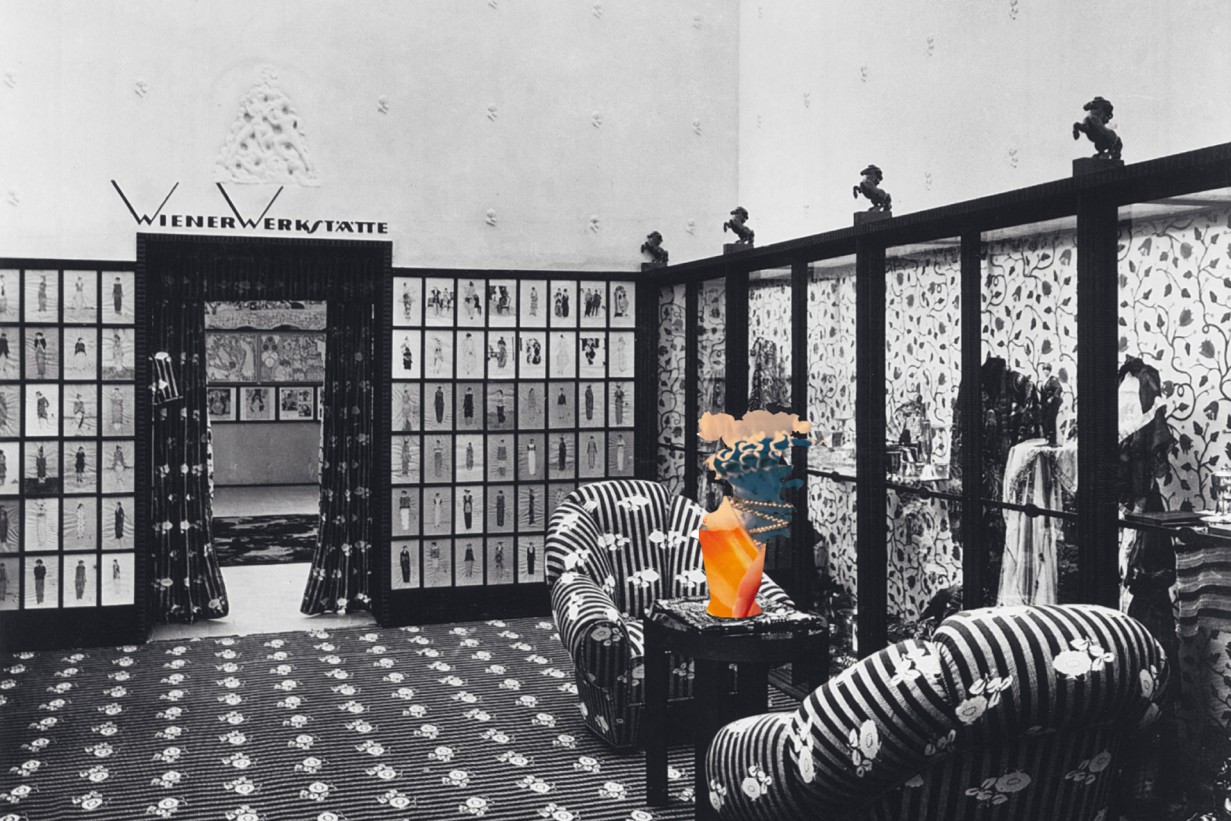
In the Imperial Royal Austrian Museum of Art and Industry (today’s MAK), founded in 1864, and the School of Arts and Crafts (today’s University of Applied Arts)–that evolved from the museum and that from 1900 onwards was closely associated with the Secession–the foundations of such reform movements as the Wiener Werkstätte (whose archive the MAK now possesses), the German and Austrian Werkbund, and the Bauhaus were laid. Following the principle of the “total work of art,” the intense exchange of ideas between architecture, painting, and the applied arts in Vienna formed the basis of a new aesthetics.
A new perspective on Vienna around 1900, centered on such MAK exhibitions as The Women Artists of the Wiener Werkstätte and the diverse narratives generated thereby, aims to reveal the essence of this formative epoch. Besides treasures from the museum’s own collection, the reorganization will incorporate outstanding objects on loan.
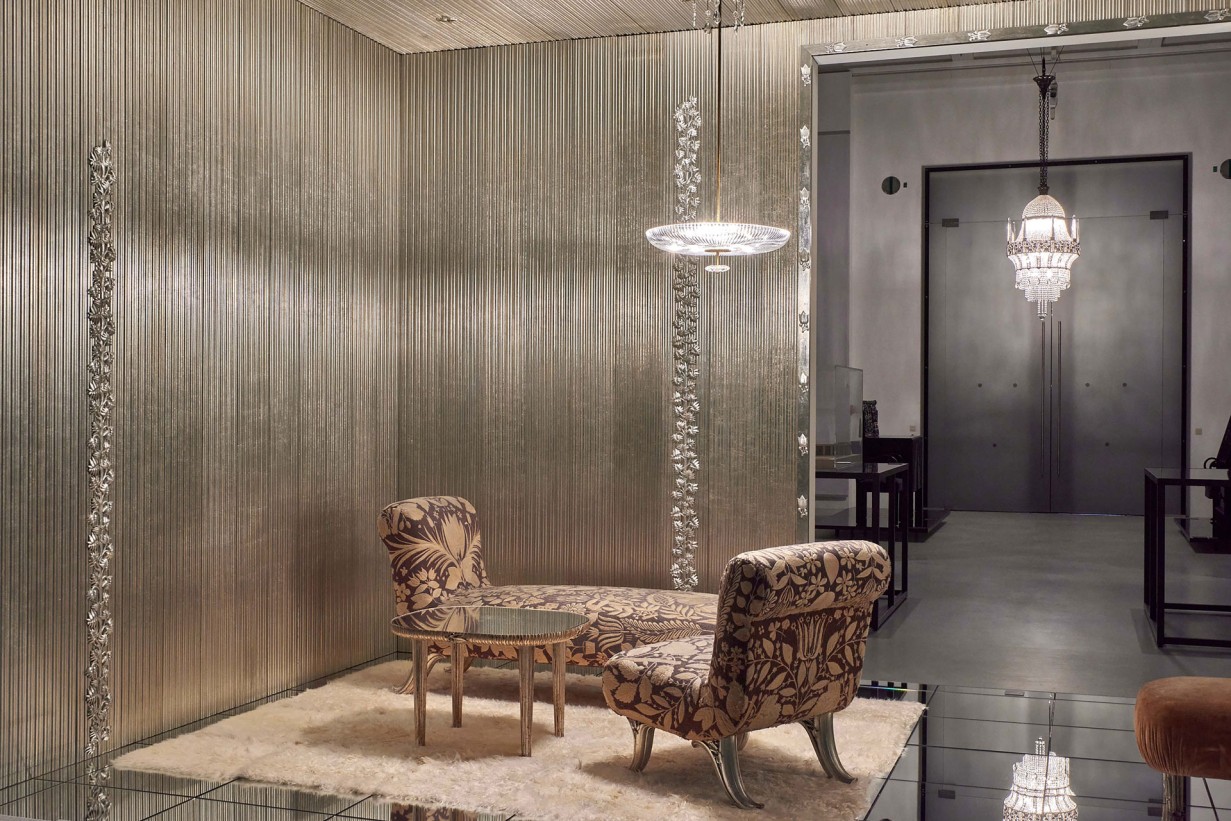
The reinterpretation of objects in the collection will include both formal and social aspects as the country progressed through five different forms of government, giving rise to associative links between objects, ideas, and contexts that extend into the present. In doing so, to accompany the Vienna 1900 collection’s well-known highlights Markus Schinwald has developed film-set-like scenarios and archival settings that feature objects ranging in size from bookplates to monumental pieces of furniture and wall friezes. The three new exhibition rooms offer a cross-section of these jewels of applied art such as only the MAK with its outstanding collection can offer.